
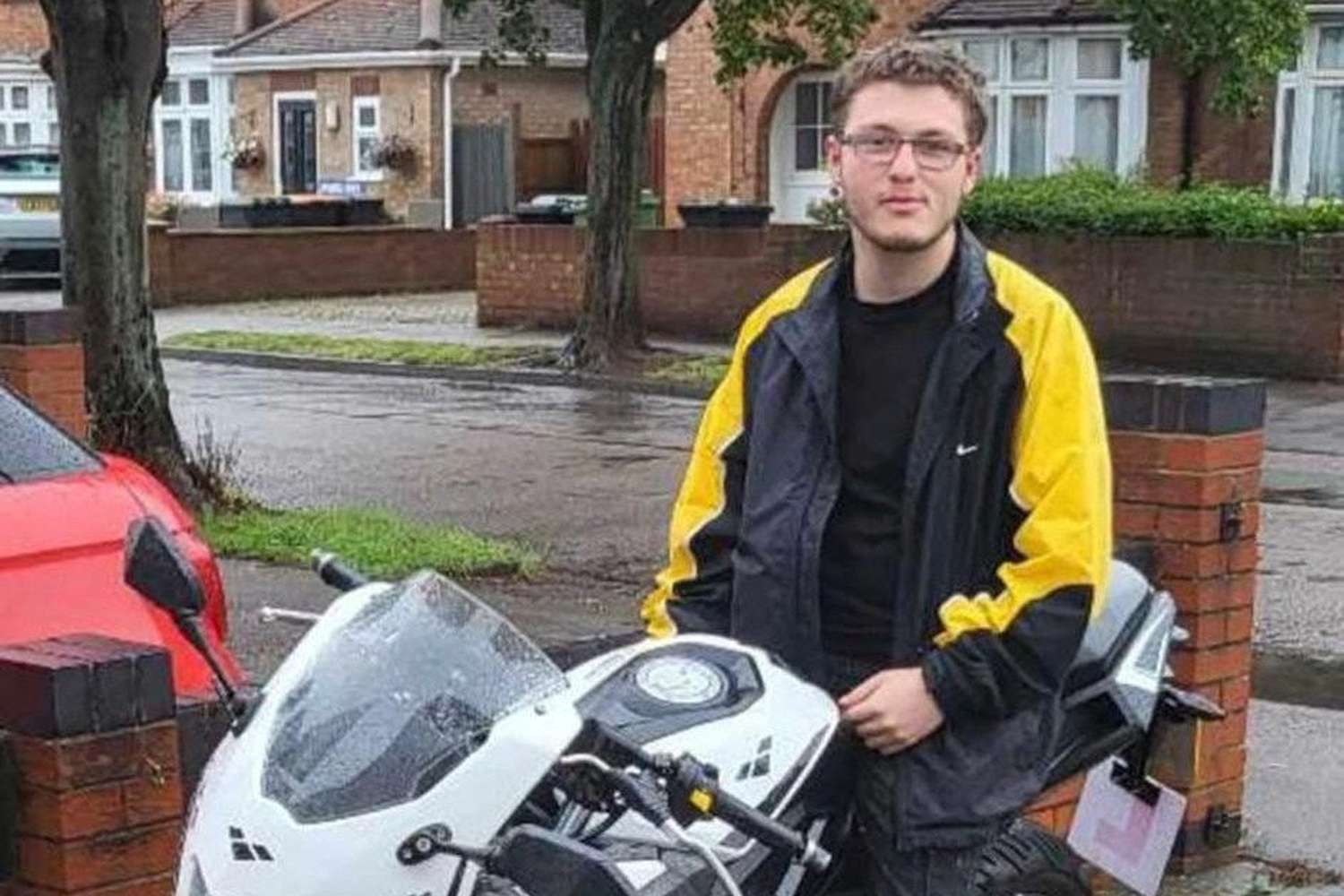
Tyler Morton was told he had an ear infection and given antibiotics, but his symptoms worsened and a scan and biopsy showed he had a grade 4 glioblastoma
:max_bytes(150000):strip_icc():format(jpeg)/Man-dies-from-ear-infection-071626-f278012002b74b02b807f2685dd03d09.jpg "Man dies with ear infection")
Credit: SWNS
NEED TO KNOW
- A 21-year-old man in England died from a brain tumor just four weeks after he was diagnosed with a suspected ear infection
- Tyler Morton, an artist who lived in the town of Bedford, had glioblastoma, an aggressive form of brain cancer
- His sister, Ella, is working with Brain Tumour Research to raise money and awareness as the charity urges the U.K. government to increase investment in research
An “amazing” 21-year-old man from the U.K. who was diagnosed with a suspected ear infection died from an incurable brain tumor just four weeks later.
Tyler Morton, an artist who lived in the town of Bedford, about 50 miles north of London, died from glioblastoma, an aggressive form of brain cancer, in March.
He first noticed an earache in January, according to a press release from Brain Tumour Research. He later noticed numbness on the left side of his face and began losing his balance and struggling with walking, so he went to the hospital.
There, he was diagnosed with an ear infection and given antibiotics.
However, they didn’t work. Tyler began throwing up and lost function on the entire left side of his body.

Credit: SWNS
His sister Ella, 19, explained that her brother underwent a CT scan and was told he had vertigo and given anti-sickness medication.
“It didn’t help at all,” she said, per the press release. “I took him back to the hospital; when we arrived, he had two seizures. He was physically disabled by this point and could barely talk.”
Another CT scan showed a lesion on his brain, per the release. A week later, he had another scan and then a biopsy the following day, and after another week, he found out he had a grade 4 glioblastoma.

Credit: SWNS
Per the Mayo Clinic, glioblastomas are the most serious type of glioma brain tumor and are the most common malignant brain tumor in adults.
There is no cure, but treatments including surgery, radiotherapy and chemotherapy can help slow tumor growth, ease symptoms and help some patients live longer.
By the time Tyler was diagnosed, however, “He couldn’t do anything himself,” Ella said, per the release. “He was just a body at that point.”

Credit: SWNS
She continued, “Tyler was discharged from hospital to basically pass away at home.”
He died on March 25, less than two weeks after his 21st birthday.
Ella said she was “distraught” that nothing could be done, and “angry and upset” that they didn’t find out about his brain tumor sooner.
“There are very limited treatment options compared to other cancers,” she said. “We were told Tyler couldn’t have any treatment because his body wouldn’t have been able to handle it. Everything happened so quickly and he deteriorated so fast.”
Paying tribute, she called Tyler an “amazing” older brother and said the two of them were “inseparable.”
“He was funny and kind,” she added, “The sort of brother I went to for anything.”
In her brother’s memory, Ella took on Brain Tumour research’s ‘200k in May Your Way’ challenge five weeks after his death, raising more than £1,300 (over $1,750) for the charity.

Credit: SWNS
She is also working with the charity for its Glioblastoma Awareness Week, which runs until Sunday, July 19, to highlight the devastating effects of the condition.
According to the charity, only 4% of people diagnosed will survive five years or more, with the average person with glioblastoma living for 12 to 18 months.
Despite this, there have been no new treatments for glioblastoma approved since 2025, and the charity is urging for more investment.
Never miss a story — sign up for PEOPLE’s free daily newsletter to stay up-to-date on the best of what PEOPLE has to offer, from celebrity news to compelling human interest stories.
Dr. Karen Noble, director of research and policy at Brain Tumour Research, said in the release, “Tyler’s story reflects the devastating reality faced by so many families across the U.K.”
“We are calling on the government to increase the national investment in research into brain tumors, including glioblastoma.”
In an additional statement provided to PEOPLE, she paid tribute to Tyler’s sister for her commitment.
“We’re incredibly grateful to Ella for helping to raise vital awareness and funds,” she said. “Tyler’s story is a stark reminder that brain tumors are indiscriminate; they can affect anyone at any age. With the continued efforts of people like Ella, we will change outcomes for people diagnosed with this devastating disease.”