
Researchers used AI to reveal the writing on scrolls damaged during the ancient disaster at Pompeii
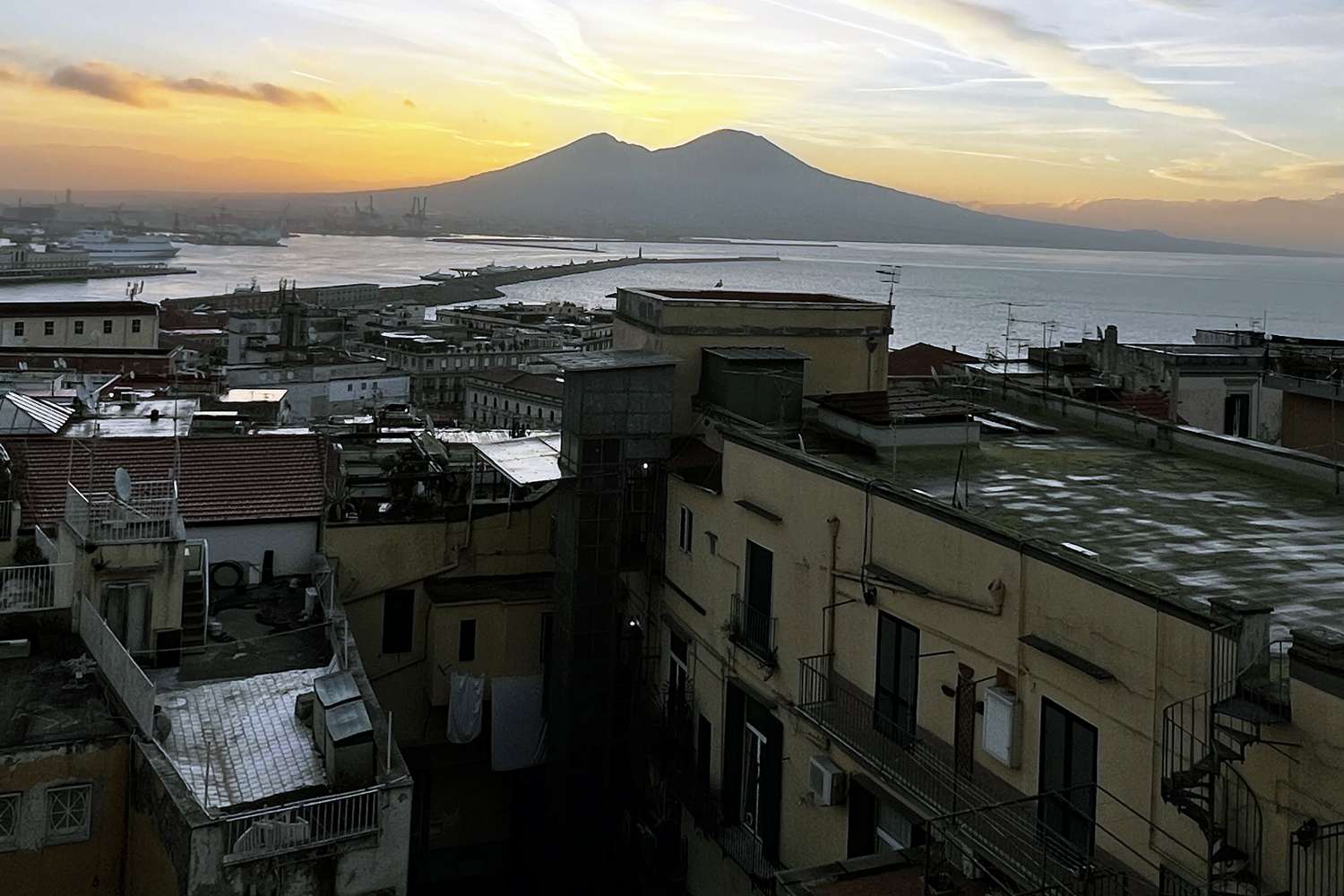
:max_bytes(150000):strip_icc():format(jpeg)/Mt.-Vesuvius-at-sunrise-062626-281278fa51624203b4b018a548844281.jpg "Image of Mt. Vesuvius at sunrise.")
Credit: University of Kentucky
NEED TO KNOW
- Scientists have been able to read part of an ancient scroll, which was carbonized when Mount Vesuvius erupted nearly 2,000 years ago, for the first time
- They used artificial intelligence to help them virtually unwrap the PHerc. 1667 scroll and tell the ink apart from the papyrus to decipher the letters
- Researchers also found books about the ancient world from the Epicurean philosopher Philodemus and more than 70 columns of text from another scroll
Researchers have been able to read part of an ancient scroll burned by Mount Vesuvius nearly 2,000 years ago for the first time.
The Herculaneum scrolls, named after a Roman town carbonized by the eruption of Vesuvius in Pompeii, Italy, in 79 A.D., were thought to be unreadable until a major scientific breakthrough with the help of artificial intelligence.

Credit: University of Kentucky
The scrolls were housed in a villa in Herculaneum that was engulfed by ash when the volcano erupted, essentially turning them into charcoal.
Thanks to the scientific advances, however, the PHerc. 1667 scroll has now been fully virtually unwrapped, allowing researchers to read nearly five feet of text across 20 columns, according to a release from the EduceLab laboratory in Kentucky, which has been at the forefront of the research.
“This scroll was deemed completely unreadable when part of it was opened in the 1980s,” said Federica Nicolardi, assistant professor in papyrology at the Università degli Studi di Napoli Federico II, per the release.
"While a few isolated letters were visible, overlapping layers obscured the writing, and the scroll was assigned a readability score of zero. But now, with virtual unwrapping, we can follow sustained arguments across multiple columns. That's a transformational shift,” Nicolardi added.

Credit: University of Kentucky
The breakthrough was announced in a press conference at the Biblioteca Nazionale di Napoli Vittorio Emanuele III, just 40 miles away from the famous volcano, on Thursday, June 25, by researchers working on the Vesuvius Challenge. The conference is available in full on YouTube.
"For nearly two millennia, many of these texts have been physically preserved but intellectually inaccessible,” Brent Seales, the Stanley and Karen Pigman Chair of Heritage Science at the University of Kentucky and a co-founder of the Vesuvius Challenge, said in the release.
“Today — after years of interdisciplinary work combining advanced imaging, artificial intelligence, academic research and an innovation contest — we are finally able to read them.”

Credit: University of Kentucky
As well as PHerc. 1667, scientists have recovered more than 70 columns of text from another scroll, PHerc. 172, which lives at the Bodleian Library at the University of Oxford in England.
They've also identified new books about the ancient world by the Epicurean philosopher Philodemus, including On Vices, Book 1 and On Gods, Book 8.
Since researchers began trying to open the scrolls more than 200 years ago, these discoveries are the most significant advancement, though there was another promising breakthrough two years ago.
"Scholars can now follow arguments, trace ideas across multiple columns and understand these works as complete compositions — rather than archaeological fragments," the release read.
In the past, attempts to unwrap and open the scrolls risked damaging and destroying them.
In contrast, the new approach sees the scrolls scanned using high-resolution micro-CT imaging to produce X-ray maps of the delicate papyrus layers.
Scientists digitally unwrapped the writing surface, mapping its layers and flattening them into something readable without touching the scroll physically.
Machine-learning models then helped the researchers to find the words themselves, through recognizing tiny differences in texture and structure to uncover the hidden ink.
Never miss a story — sign up for PEOPLE’s free daily newsletter to stay up-to-date on the best of what PEOPLE has to offer, from celebrity news to compelling human interest stories.
With so many new texts, the focus of the research is shifting away from the engineers and computer scientists at the forefront of these technologies to classicists, historians and papyrologists who can interpret and contextualize them.
“This is no longer just about imaging or machine learning,” Seales said. “Now we need experts who can read, edit and understand what they are saying.”
"Today, we are hearing voices that have been silent for 2,000 years,” Seales added. “For the first time, we are uncovering and reading them — but most importantly — we are beginning to understand them."